100 Years of Black History Commemorations
As we celebrate this year, let’s learn and honor the history of Black History Month itself.
Written by Andy Solages, Senior Technical Content Manager
February 11, 2026

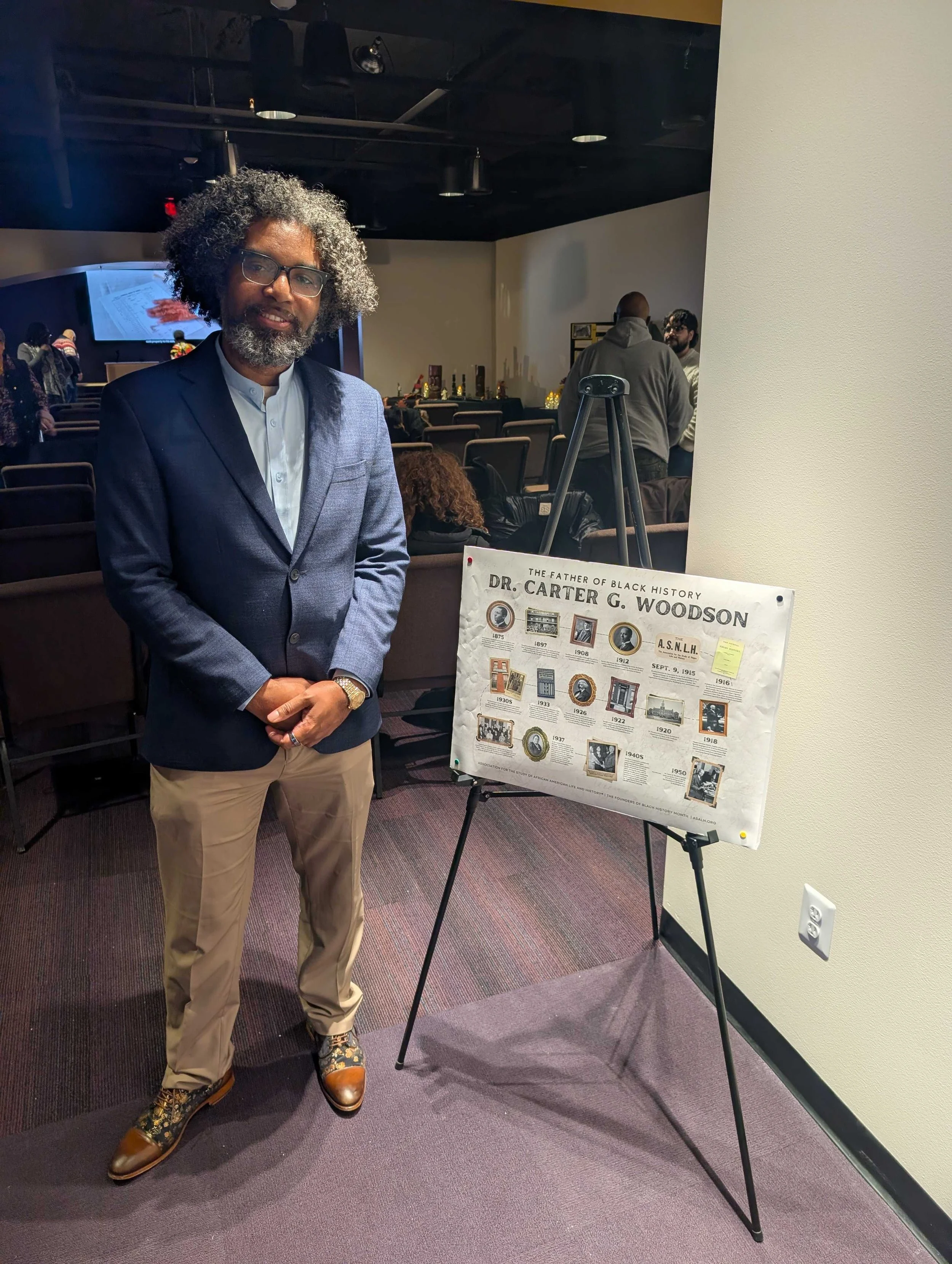
Dr. Carter G. Woodson
February 2026 marks 100 years of Black history commemorations since Dr. Carter G. Woodson and the Association for the Study of Negro Life and History (ASNLH) founded Negro History Week in 1926. Now celebrated as Black History Month, Negro History Week was meant to be a brief period to showcase what scholars, students, and communities had learned about Black people in history during the previous year.
Why February?
If we remember Black History Month’s origin and intent, we can easily dismiss the annual jokes and gripes about Black history getting “the shortest and coldest month.” Dr. Woodson selected the second week of February to build on pre-existing history celebrations in Black communities, including the commemorations of President Abraham Lincoln’s birthday on February 12 and Douglass Day on February 14. Douglass Day, which honors Frederick Douglass and his chosen birthday, was very popular in Black schools thanks to organizers like Mary Church Terrell, a leading educator, activist, and journalist.
But why only a week? Why just a month? The celebration’s short duration only poses a problem if we assume Woodson meant for us to cram our study of Black people in history into a few days. In Woodson’s vision, an authentic celebration required year-round study in our schools, families, institutions, and community groups.
Black History Month is a time to share seasoned, slow-cooked knowledge. Save contextless, maybe-facts that get forgotten minutes after someone generates and consumes them for another month (maybe in Never-uary).
The Founders
ASNLH — Black History Month’s founding organization — was a network of Black educators that trained teachers and produced educational materials that reflected the agency, perspectives, narratives, and experiences of Black people. Born in New Canton, Virginia, on December 19, 1875, Carter Godwin Woodson founded ASNLH in 1915 alongside George Cleveland Hall, W.B. Hartgrove, Alexander L. Jackson, and James E. Stamps. Woodson was an educator, historian, and institution builder.
As discussed in books like Fugitive Pedagogy: Carter G. Woodson and the Art of Black Teaching by Jarvis Givens, school boards and local oppressors mandated that teachers use textbooks and materials that denigrated African people, downplayed slavery’s harms, and insisted that Europeans and their descendants were the only significant actors in history. Black teachers in segregated schools used ASNLH publications (e.g., the Negro History Bulletin) and Woodson’s textbooks (e.g., The Negro in History) to remake and correct classroom curricula for their students’ benefit.
Many educators covertly taught from ASNLH materials to evade surveillance and limit the risks of being fired, hurt, or murdered for doing so. But there were also overt challenges to the status quo. By publicizing ASNLH’s work and dramatizing Black achievement, Negro History Week excited communities and helped mobilize support for teachers who pushed local authorities to include Black history in official curricula.
By the way, the ASNLH still exists, but is now called the Association for the Study of African American Life and History (ASALH®). I’m a member.
Black People In History
Woodson argued that the mainstream textbooks omitted “Black people in history.” For example, the texts would draw from racist historians who alleged that slavery was a “benevolent” institution that benefited “happy, singing slaves,” while Reconstruction failed because Black Americans — like all people of African descent — were supposedly incapable of governing and should be disenfranchised due to inherent inferiority. According to I’ll Make Me A World: The 100-Year Journey of Black History Month by Jarvis Givens, even the rare, ostensibly progressive-for-the-time texts that mentioned the abolitionist movement only discussed William Lloyd Garrison and other abolitionists of European descent. Dominant narratives never recognized the agency or perspectives of Black Americans in any advances or changes in their lives or in the country as a whole.
In schools influenced by Woodson and the ASNLH, teachers revised and corrected curricula to include plantation insurrections, escapes, maroonage, vigilance committees, politicians, writers, artists, musicians, scientists, the United States Colored Troops (USCT), African civilizations, the Haitian Revolution, and the stories of everyday African American people that the dominant narratives excluded. These were the classrooms where students and faculty engaged W.E.B. Du Bois’s Civil War General Strike concept, in which people dealt a fatal blow to the Confederacy by escaping from slavery and withdrawing their essential labor. Woodsonian schools and Negro History Week celebrations transmitted longstanding African American narratives that honored freedom fighters, including Harriet Tubman, William Still, Robert Smalls, Nat Turner, and Frederick Douglass, alongside local historical figures.
I’ve used the term “Black people in history” in this blog as a nod to Woodson’s assertion that “Negro history” is really “the Negro in history.” In studying “Black people in history,” students learned history (no modifier needed) that included the Black people, agency, and experiences excluded from dominant mainstream narratives. By choosing not to account for all actors and our common humanity, dominant narratives produced inaccurate histories that justified harm against excluded communities.
Woodson was well-positioned to judge the dominant narratives. He knew them inside and out, given his bachelor’s degree from Berea College, his second bachelor’s degree and master’s degree in European history from the University of Chicago, and his doctorate in history from Harvard University. But his education did not begin in the universities.
Dr. Woodson was the son and student of formerly enslaved people, including his literate mother Anne Eliza Woodson, his USCT veteran father James Henry Woodson, schoolteachers John and James Riddle (who were also his maternal uncles), and the coal miners he labored and learned with from 1891 to 1895 (ages sixteen to twenty). No matter what his professors and their books claimed, Woodson knew his people were “in history.”
Study and Celebration
During Black History Month and its week-long predecessor, 20th-century students and educators shared knowledge through oratory, presentations, skits, plays, pageants, essay contests, costumes, songs, art, displays, and learning activities recommended in ASNLH “Negro History Week Kits” or the Negro History Bulletin. Today, community organizations and desegregated schools continue this legacy.
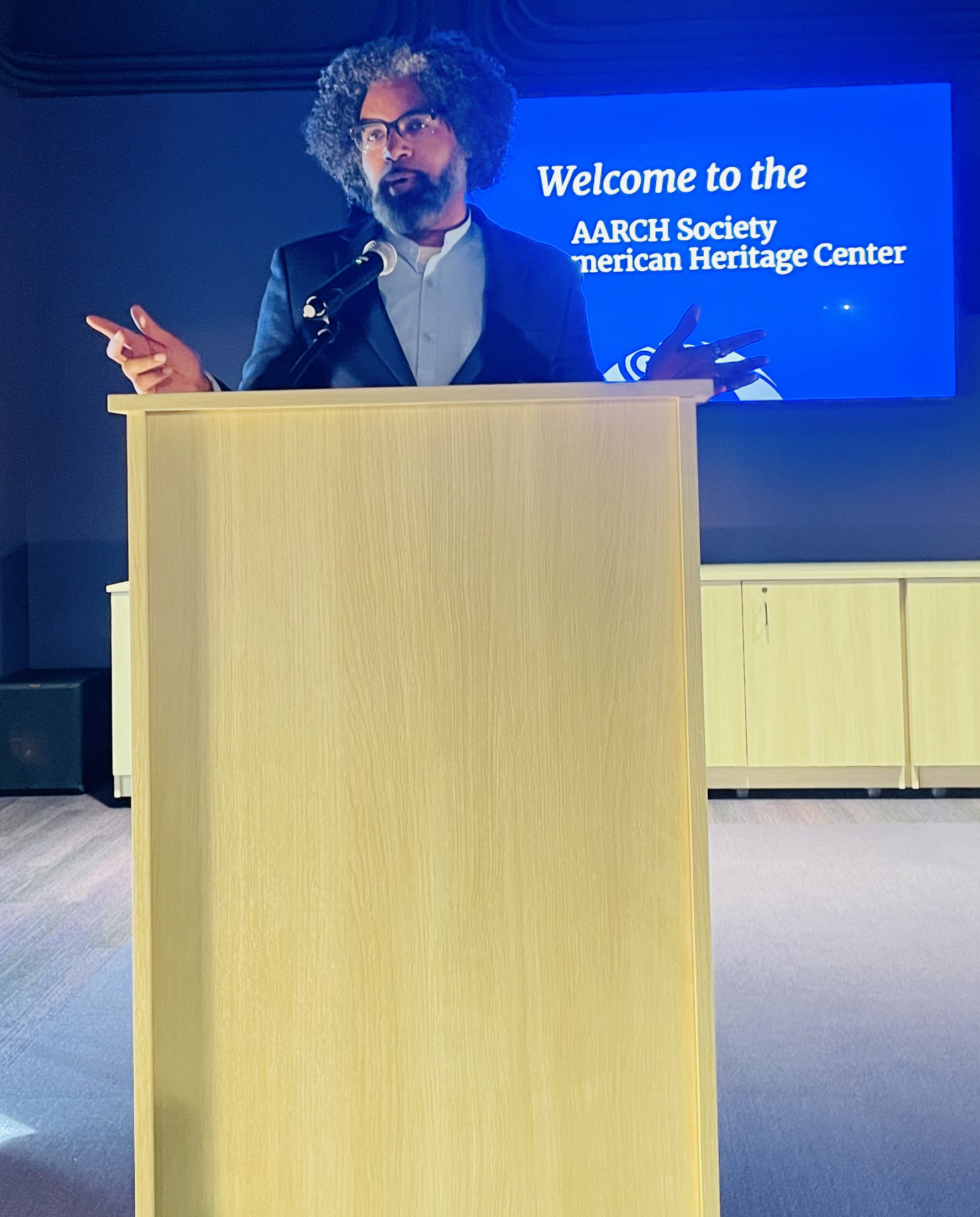
At the event I helped organize with the African American Resources, Cultural, and Heritage (AARCH) Society, students delivered presentations on historical figures, with some of the children speaking in character and dressed as their subject. My daughter delivered a speech based on The Rebellious Life of Mrs. Rosa Parks by Jeanne Theoharis. Dressed as the legendary activist, my little girl (who is somehow a teenager) offered a portrait of Mrs. Rosa Parks, her politics, and the Montgomery Bus Boycott that challenges common misconceptions. My seven-year-old son said a few words about communal learning based on Carter Reads the Newspaper by Deborah Hopkinson.
Adult speakers included a community historian and genealogy expert who experienced the segregated schools I only read about, and a videographer who worked on a project documenting the stories and perspectives of activists who served in the Student Non-Violent Coordinating Committee (SNCC). I delivered the keynote covering the event’s theme and the history of Black History Month: “Black History Month and the Spirit of Negro History Week.”
Black History Month is not the historical equivalent of Comic-Con, where we have the option to quickly discuss select Black people after consuming dominant, exclusionary narratives all year. Black people in history are essential and not optional. This is true whether we’re talking about national icons, local heroes, or even the history of companies like LMO. We don’t forget Ron Owens, the founder behind our “O.”
This year, remember that authentic Black History Month celebrations come from our communities and year-round learning. They are also an invitation for everyone to consider whose voices and perspectives are missing from dominant narratives as we strive to recognize the humanity of all people.