
LMO at IBS 2026
Attending tradeshows is one of the ways LMO stays connected with building product manufacturers and our audiences.
Written by Andy Solages, Senior Technical Content Manager
March 4, 2026
We’re grateful for the manufacturers that trust LMO to create their content and campaigns. Doing right by our clients includes reading, training, and avoiding marketing bubbles. Instead of inhaling our own fumes, we’re out in the world listening and learning with contractors and other experts.
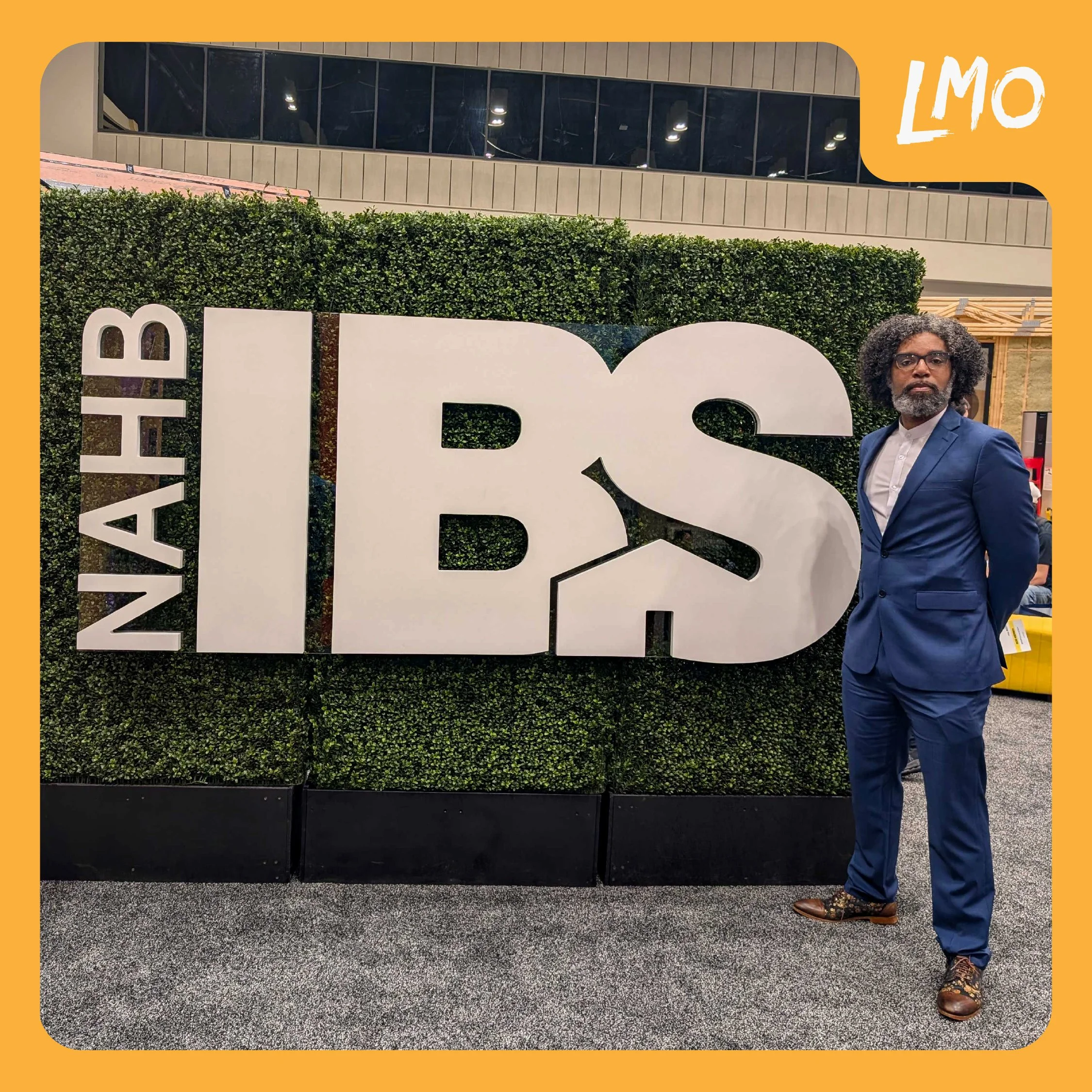
Tradeshows and conferences help us get some of the face-to-face and mouth-to-ear time our craft demands. During the week of February 16, I represented LMO at the 2026 International Builders’ Show® (IBS) and the Kitchen and Bath Industry Show (KBIS) at the Orange County Convention Center (OCCC) in Orlando. I was a booth-less nomad among the 117,000 IBS and KBIS registrants.
Seen and Heard
This year, I’m probably supposed to say everyone was talking about AI. But my IBS conversations weren’t conversations—they were two or more carbon-based entities exchanging thoughts about products and applications, using a common set of sound-driven variables to communicate. In fact, it’s safe to say what I heard wasn’t about one thing but was about other things that sound different but might be part of a whole with the first thing.
(Narrator: They were conversations.)
IBS introduced AI and Tech Studio sessions this year, so I’m certain there were worthwhile demos and discussions showing builders and contractors practical ways to improve their businesses with AI. In the Construction Performance Zone, I saw someone use what appeared to be an AI-enabled LiDAR tool for measurements and error-checking.
However, I heard far more talk about preventing water and moisture damage. Drainage, WRBs, flashing, perm ratings, dew point temperatures, and best practices for better control layers came up during informal chatter and in sessions. Of the several Dr. Joe Lstiburek quotes I heard daily, the one I captured verbatim was, “Things have been getting wet forever. What’s different is that things are staying wet longer.”
My experience was a function of the people I had to meet, my favorite specialty zones, and the event’s footprint. I went everywhere, but there were only so many places I could stop for meaningful conversations and quality ear hustling.
Beyond water and moisture control, I overheard and engaged people in conversations about product pros and cons. Products that reduced the risk of errors (e.g., with pre-drilled holes), reduced thermal bridges, and made work quicker while maintaining quality got positive reactions. For example, I got to try the Muddskipp wall coating and see how it would save time and money at the drywall stage. The person who guided me through was a customer, and the demonstration was so effective that I wasn’t surprised when I subsequently learned that Muddskipp earned a Best In Show award. While I was at the booth, a business owner ran to get her employees to show them the product.
Even when discussing their preferred components and mechanical systems, the contractors and engineers I encountered emphasized that installation mattered more than the brand. Nothing pops marketing bubbles better than skeptics with field experience. And we need to hear from those skeptics to keep our client work credible.
There was a moment when I was oohing and ahhing about a cool, experiential display and then heard a contractor say, “Yeah, but in real life it wouldn’t work like this. You would need [redacted] to [redacted].” I found the clarification, and my dampened joy, useful, but we’ll reserve the details for the group chat. We’d love to work with that manufacturer in the future. And we’re doing the same with any industry scuttlebutt we may have gathered.
A real-life application brought me to Nichiha’s booth. Back in October 2017, a wildfire destroyed over 546 structures in California’s Redwood Valley Mendocino Lake Complex within just two hours. The only building that survived was a house with Nichiha’s fire-resistant fiber-cement siding. I was familiar with the story, so I stopped by to chat about fire resilience and see what they were up to.
As usual, informal, candid conversations were my favorites at the event, but the BS & Beer Live Show session in the Construction Performance Zone was a close second. That session took up a few notebook pages. Memorable and entertaining parts included saying we need beauty and can’t expect people to live in perfect, energy-efficient cubes because a designer wants a low surface-to-volume ratio. I also got to say “hi” to Emily Mottram, a BS & Beer host, founder of Mottram Architecture, and co-author of the must-read Pretty Good House: A Guide to Creating Better Homes.
Return to the Source
Being Logical: A Guide to Good Thinking by D.Q. McInerny offers a recommendation for assessing the clarity and soundness of ideas that we can apply to our work:
“Our ideas are clear, and our understanding of them is clear, only to the extent that we keep constant tabs on the things to which they refer. The focus must always be on the originating sources of our ideas in the objective world. We do not really understand our own ideas if we suppose them to be self-generating, that is, not owing their existence to extramental realities.”
Anything we create draws from the real world, and to the real world it will return for judgment. Whether we’re sharing facts, writing a case study, or telling a fanciful myth, returning to our sources can help us achieve clarity and refine our creations. There is a reason we tell stories of extra-terrestrials with societal arrangements and physiology we recognize. Humans imagine and respond to fictional beings based on what we perceive and experience. Unicorns do not emerge without horses.
As we craft content and campaigns, we regularly return to the contractors, engineers, building scientists, and product experts who inspire us and help us assess whether we’re on the right track. It would be easy to make our clients look silly if we pretended that we could create in isolation. Our target audiences include the aforementioned and appreciated skeptics, who can be a tough crowd. Happily for LMO’s clients, we’ll continue to step outside and craft meaningful stories that move and educate people.